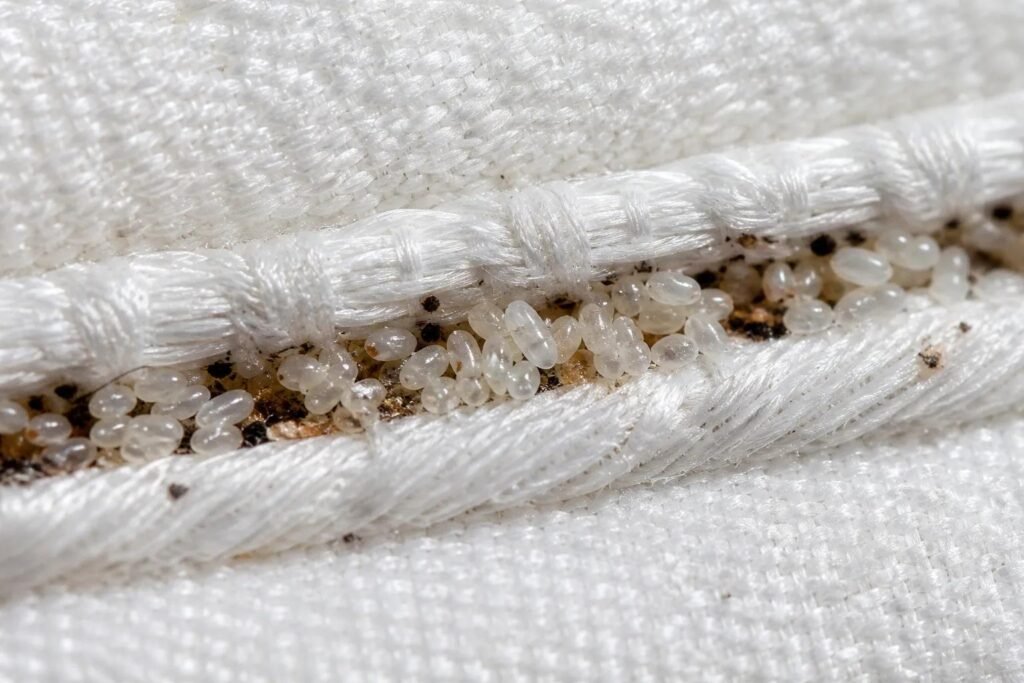
I was cleaning my living room when I noticed something tucked deep inside a small crack in my couch. At first, I thought it was just dust or tiny seeds. But when I looked closer, I saw several small brown insects gathered together, along with clusters of tiny white, rice-shaped objects.
My heart immediately sank.
Could these actually be bed bugs?
Unfortunately, this is one of the most common places bed bugs hide. They love narrow cracks, fabric seams, folds in furniture, mattresses, and even behind baseboards because these spots keep them protected during the day.
What You’re Seeing
The image appears to show:
- Adult bed bugs hiding inside the seam of a couch.
- Tiny white eggs attached near the insects.
- A typical hiding spot where an infestation can quickly grow unnoticed.
Bed bug eggs are incredibly small—about 1 mm long—and are usually pearly white or translucent. A single female can lay hundreds of eggs during her lifetime.
Signs You May Have Bed Bugs
Besides finding the insects themselves, watch for these warning signs:
- Tiny black or dark brown spots (their droppings)
- Small blood stains on sheets or furniture
- Shed skins left behind as young bugs grow
- Itchy bites that often appear in clusters or lines
- A sweet, musty odor in heavy infestations
Not everyone reacts to bites, so an infestation can go unnoticed for weeks.
How Do They Get Into Homes?
Bed bugs don’t appear because a home is dirty. They are excellent hitchhikers and can enter your home through:
- Used furniture
- Luggage after traveling
- Hotels or vacation rentals
- Public transportation
- Clothing or bags
- Visitors carrying them unknowingly
Anyone can get bed bugs.
What Should You Do?
If you suspect bed bugs:
- Avoid moving infested furniture to other rooms.
- Inspect mattresses, bed frames, couches, and nearby furniture.
- Wash bedding and clothing in hot water and dry on the highest heat setting.
- Vacuum thoroughly and immediately dispose of the vacuum contents in a sealed bag.
- Consider contacting a licensed pest control professional if the infestation appears widespread.
Early action is much easier than dealing with a large infestation later.
Can You Eliminate Them Yourself?
Small infestations may sometimes be controlled with careful cleaning, heat treatment, mattress encasements, and targeted insecticides labeled for bed bugs. However, established infestations often require professional treatment because the insects are extremely good at hiding.
Final Thoughts
Finding insects like these in your couch can be alarming, but acting quickly gives you the best chance of stopping an infestation before it spreads throughout your home.
If you’re unsure whether what you’ve found is actually a bed bug, compare it with trusted identification guides or contact a local pest management professional for confirmation.