At first, it may seem like a simple blister or a minor burn. But in some cases, severe burns can develop quickly and require immediate medical attention.
The image above shows a large burn blister, which can occur after exposure to intense heat, fire, steam, hot liquids, chemicals, or electricity. While not every burn looks this dramatic, recognizing the warning signs early can help prevent serious complications.
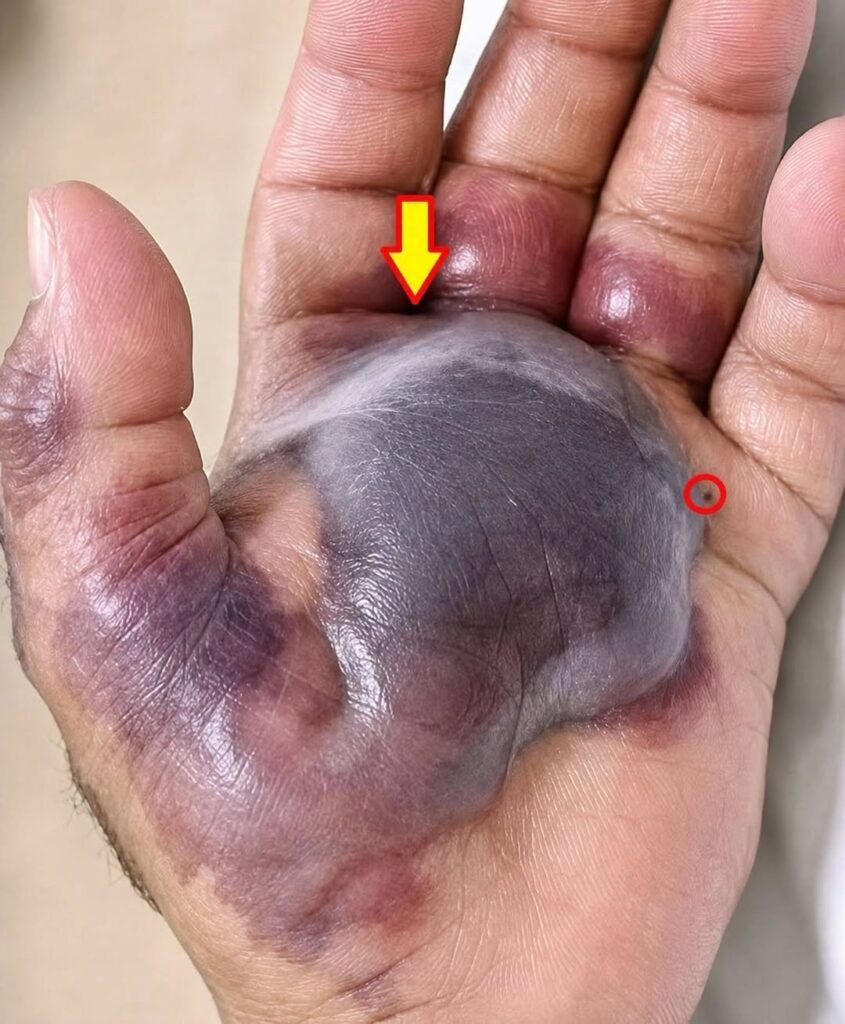
What Is a Burn Blister?
A burn blister forms when heat damages the upper layers of the skin. Fluid collects beneath the damaged skin, creating a protective bubble that helps the body heal.
Large, tense blisters are often associated with second-degree (partial-thickness) burns, though only a healthcare professional can determine the true severity.
Warning Signs That Need Immediate Medical Attention
Seek emergency medical care if you notice:
- A very large blister.
- Burns covering a large area of the body.
- Burns on the hands, face, feet, genitals, or major joints.
- Skin that turns white, black, charred, or leathery.
- Severe swelling or increasing pain.
- Numbness in the burned area.
- Difficulty moving fingers or hands.
- Signs of infection, such as pus, fever, or spreading redness.
- Burns caused by electricity or chemicals.
Burns involving the hands should always be taken seriously because they can affect movement and long-term function.
What You Should Do Immediately
If the burn has just happened:
- Move away from the source of the burn.
- Cool the area under cool running water for about 20 minutes.
- Remove rings, watches, or tight jewelry before swelling begins.
- Cover the burn with a clean, non-stick dressing.
- Do not pop blisters.
- Avoid applying butter, toothpaste, oils, or ice directly to the burn.
Why You Should Never Pop a Burn Blister
The blister acts as a natural barrier that helps protect the damaged skin from bacteria. Breaking it increases the risk of infection and may delay healing.
The Bottom Line
A large burn blister is not something to ignore. Prompt first aid and, when necessary, professional medical evaluation can reduce complications and improve recovery. If you’re unsure about the severity of a burn, it’s always safest to seek medical advice.