Have you ever noticed your fingers becoming pale, wrinkled, and shriveled after a long bath, swimming session, or doing the dishes? It happens to almost everyone—but have you ever wondered why?
Despite popular belief, wrinkled fingers aren’t caused by your skin simply “absorbing water.” Scientists have discovered that it’s actually a fascinating response controlled by your nervous system.
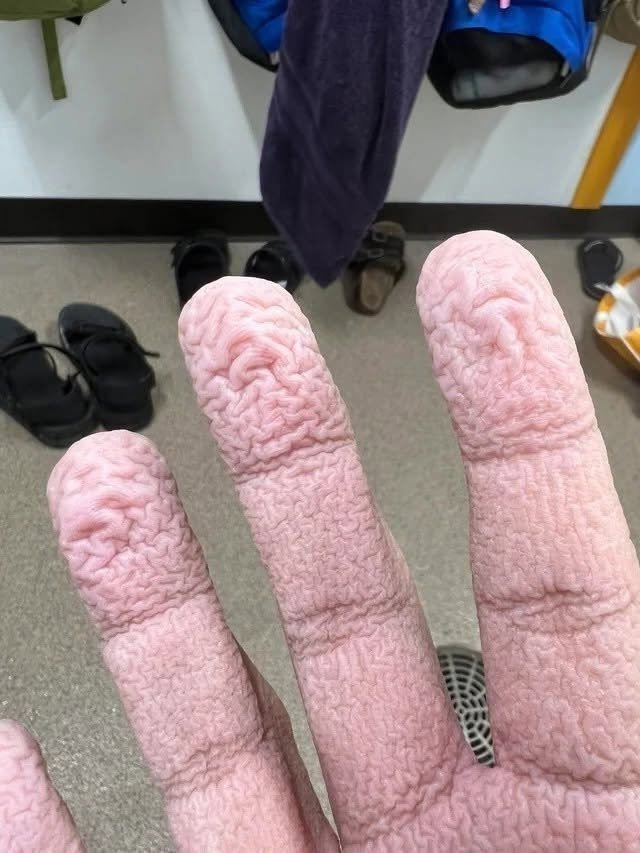
Why Do Fingers Wrinkle?
When your hands stay in water for several minutes, your blood vessels constrict. This causes the skin on your fingertips to pull inward, creating the familiar wrinkled appearance.
Researchers believe this is an evolutionary advantage that helps improve your grip on wet objects—much like the tread on a car tire improves traction on wet roads.
Can Too Much Water Affect Your Skin?
Spending long periods in water can temporarily:
- Dry out your skin.
- Wash away natural protective oils.
- Cause irritation in sensitive skin.
- Make the skin feel tight or rough after it dries.
These effects are usually temporary and improve once your skin dries and is moisturized.
When Should You Be Concerned?
Wrinkled fingers after bathing or swimming are completely normal.
However, if your fingers wrinkle very quickly, remain wrinkled for an unusually long time, or occur without water exposure, it’s worth discussing with a healthcare professional, as certain medical conditions can sometimes affect the nerves or circulation.
How to Protect Your Hands
To keep your skin healthy:
- Limit very long hot showers or baths.
- Moisturize your hands after washing.
- Wear gloves when using cleaning products.
- Drink enough water to support healthy skin.
The Bottom Line
Wrinkled fingertips after prolonged water exposure are a normal and temporary response—not usually a cause for concern. In fact, scientists believe they’re one of the body’s clever ways of helping us grip wet surfaces more effectively.